Grid Batteries Are Quietly Reshaping Power Markets
Grid Batteries Are Quietly Reshaping Power Markets
For years, grid-scale batteries were treated as a science experiment bolted onto the edge of the power system. A few megawatts here, a demonstration project there, mostly funded to prove a point. That framing is now out of date. Large battery installations have become ordinary pieces of infrastructure, sized in the hundreds of megawatts, and they are starting to change how electricity is priced and balanced in real time.
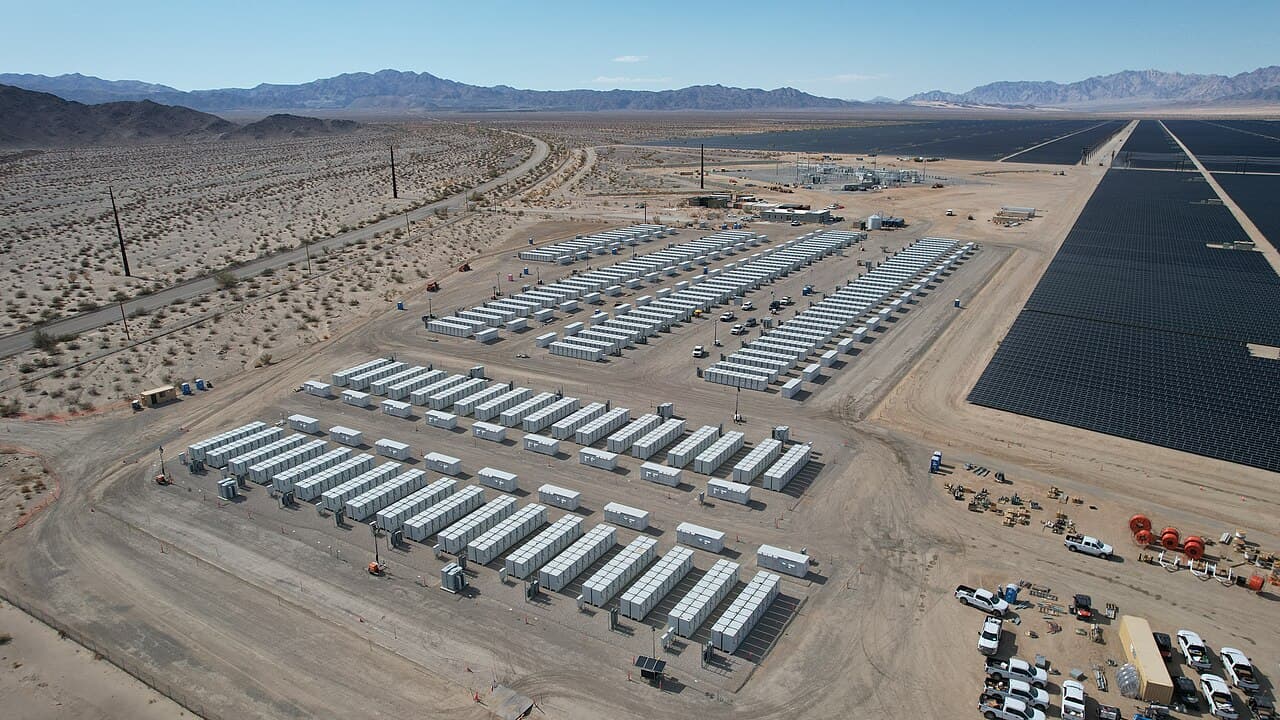
The shift is easy to miss because batteries do not look like power plants. There is no chimney, no turbine hall, no fuel delivery. A modern installation is a fenced yard of containers, each packed with lithium-ion cells and power electronics. What matters is not how they look but what they do: absorb electricity when it is cheap and abundant, then release it in the seconds and hours when the grid is short.
From backup to market player
The first wave of grid batteries was sold on resilience. Keep the lights on during an outage, ride through a fault, provide a bridge while slower plants ramp up. That role still exists, but it is no longer the main event.
Today the economic case rests on two jobs. The first is frequency response, where a battery injects or draws power within a fraction of a second to hold the grid at its target frequency. Batteries are almost perfectly suited to this because they respond faster than any spinning machine. The second job is energy arbitrage: charging when wholesale prices are low, often in the middle of a sunny or windy day, and discharging into the evening peak when prices climb.
As more storage connects, those evening price spikes get shorter and shallower. A battery fleet that discharges into the peak flattens the very curve it was built to exploit. That is a sign the technology is working as intended, and it is also reshaping the revenue math for everyone else on the grid.
Why the timing changed
Two curves crossed. The cost of battery packs kept falling as manufacturing scaled for electric vehicles, while the value of fast, flexible capacity rose as wind and solar grew. Variable renewables produce a lot of power at some hours and none at others, which creates exactly the price swings that storage is paid to smooth.
The result is that batteries are now built as merchant assets in several markets, financed on the expectation of trading revenue rather than a fixed subsidy. That is a meaningful maturity marker. When private capital funds infrastructure on market signals alone, the technology has left the pilot phase for good.
What still holds it back
The honest picture includes limits. Most grid batteries store energy for two to four hours, which is excellent for smoothing a daily cycle but not for covering a still, cloudy week. Long-duration storage, measured in days rather than hours, remains expensive and largely unproven at scale. Supply chains for cells and critical minerals are concentrated, which is a strategic risk for any country leaning hard on imports.
There is also a grid connection bottleneck. In many regions the queue to plug a new battery into the network is longer than the time it takes to build one. The hardware is ready faster than the paperwork and the wires around it.
The quiet conclusion
None of this arrives with a dramatic announcement. It shows up as slightly calmer prices, slightly steadier frequency, and a slow change in which assets earn money at which hours. Grid batteries are not replacing the power system so much as rewiring its reflexes, and they are doing it in the background while most people are not watching.